2 hr
Ravenna UNESCO Mosaics Guided Walking Tour
Explore ancient Byzantine masterpieces with an expert guide through five stunning UNESCO World Heritage sites
Reserve
Hand-picked by our editors — only the best 5 walking experiences from 12 reviewed
Verified partners for every tour, free cancellation where available, and instant confirmation on every booking.
2 hr
Explore ancient Byzantine masterpieces with an expert guide through five stunning UNESCO World Heritage sites
Reserve
Experience three World Heritage Sites showcasing breathtaking Byzantine mosaics from the 5th and 6th centuries
Reserve
2 hr 30 min
Explore Byzantine masterpieces and early Christian art with an expert guide through Ravenna's treasures
ReservePrices from verified partners. Availability updates in real time at checkout. Free cancellation policies apply where shown.
The landmarks, rooms, and views travelers on this tour remember — all visible on a single visit.
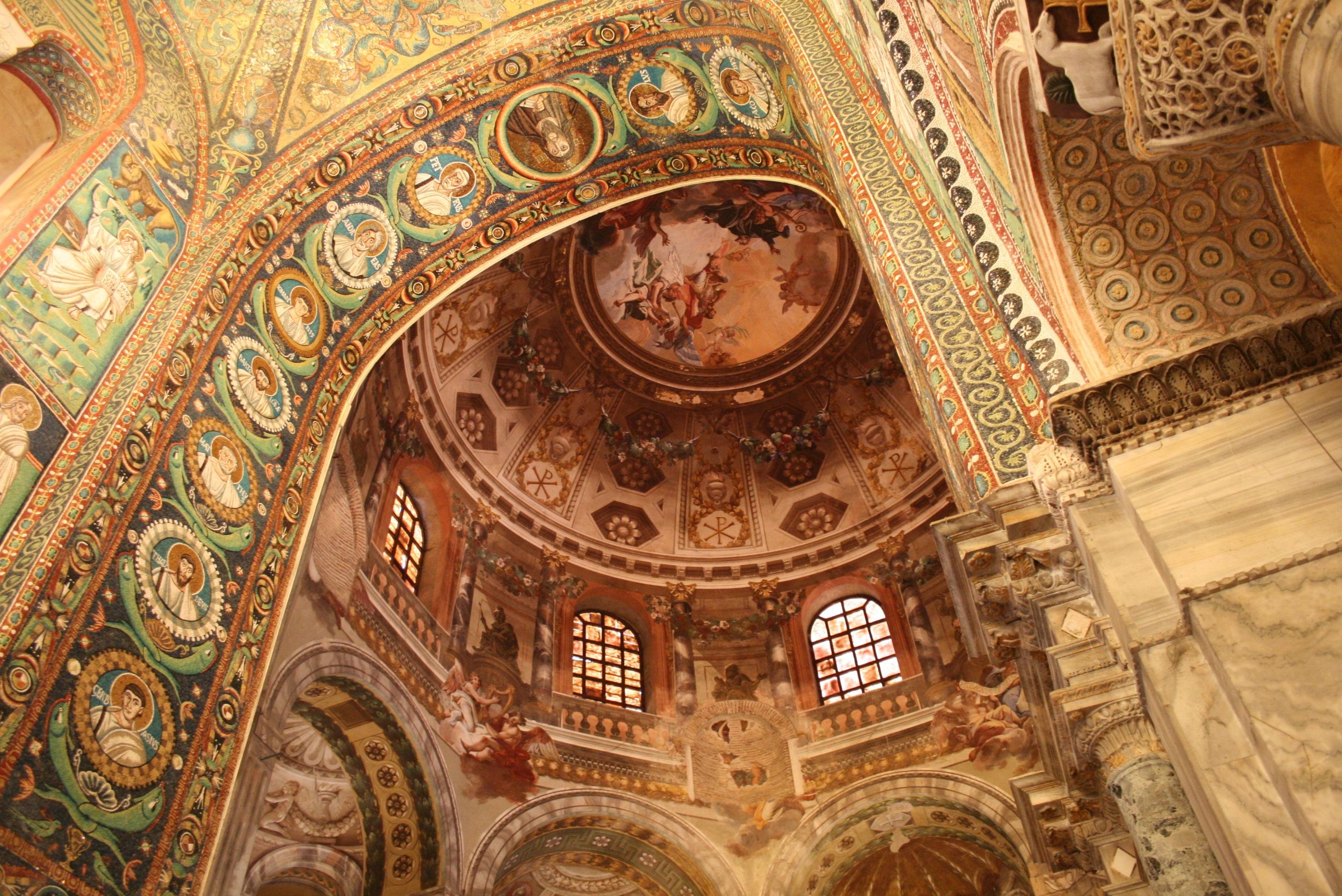
This structure is known for its intricate Byzantine mosaics and octagonal plan. It dates back to the 6th century and remains a masterpiece of early Christian art.
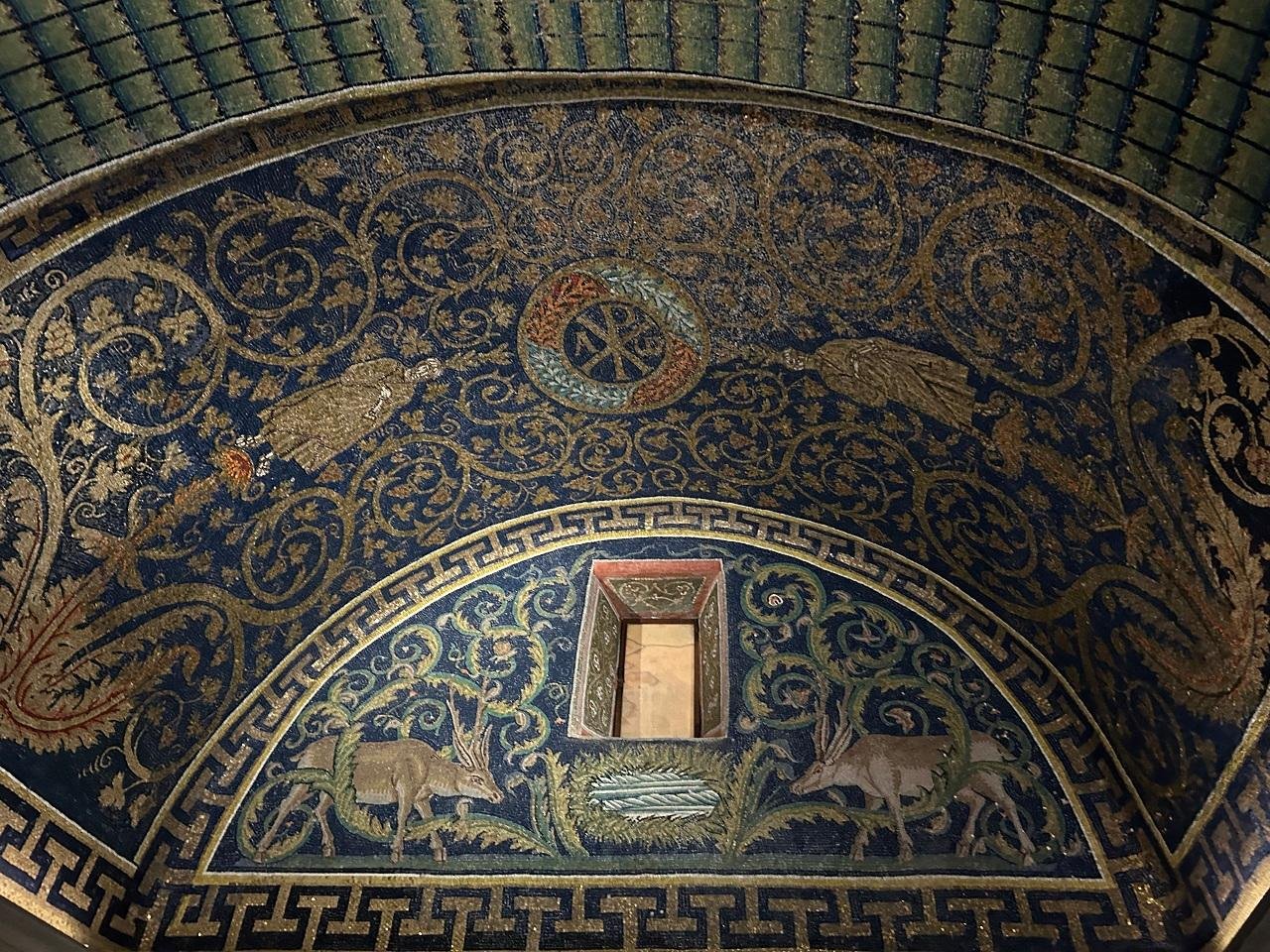
This small building contains some of the oldest mosaics in the city. The ceiling features over 500 gold stars on a deep blue background.
Built by Theodoric the Great, this basilica features long panels of mosaics showing processions of saints. It stands as a prime example of early medieval architecture.
One of the oldest monuments in Ravenna, it houses a stunning mosaic dome depicting the baptism of Christ. The craftsmanship is remarkably well-preserved for its age.
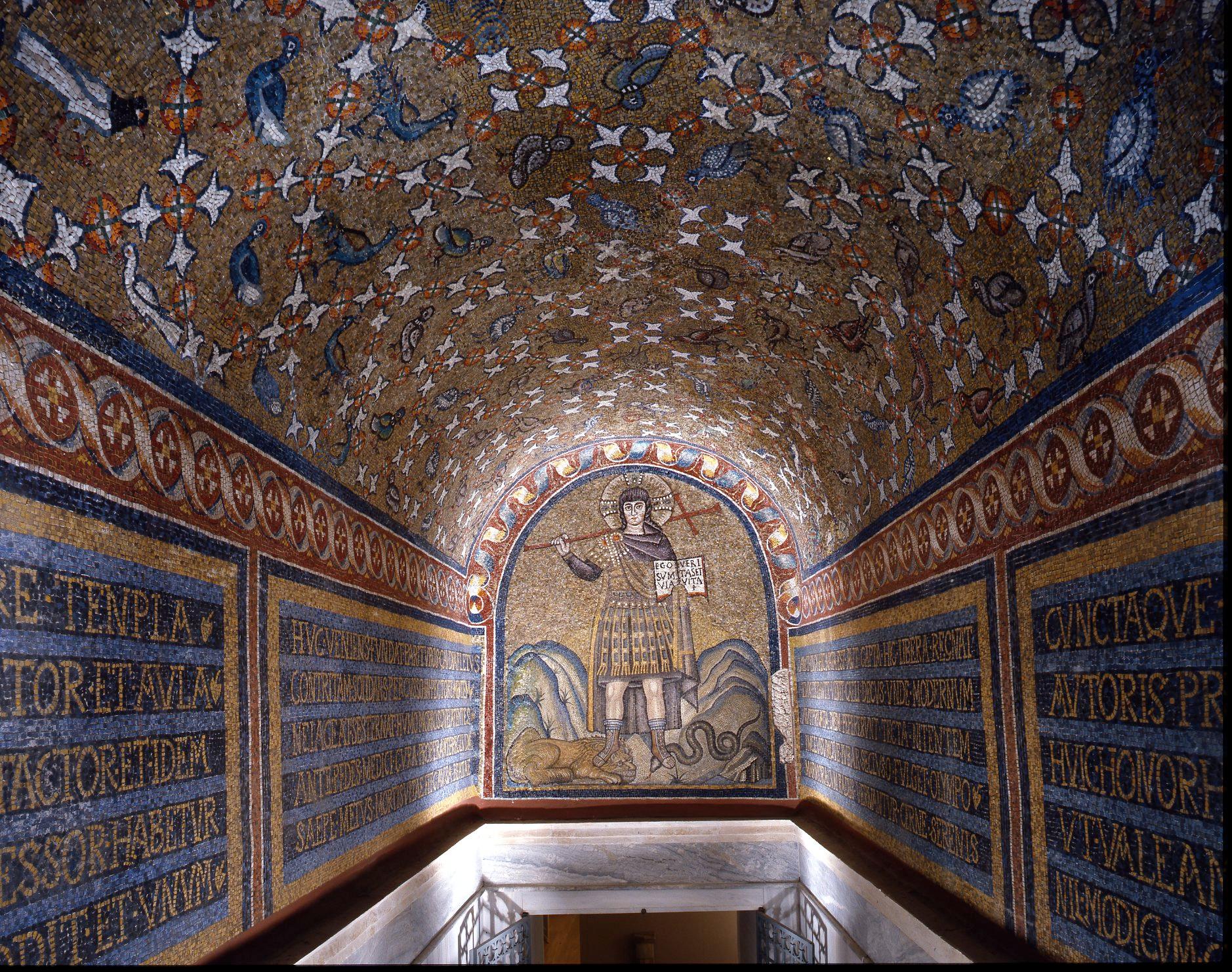
This site offers a rare example of a private oratory with early 5th-century mosaics. It provides an intimate look at the religious history of the city.
Professional guidance offers superior historical context, while self-guided visits allow for total temporal freedom; most visitors find the guided ravenna mosaic walking tour provides a more enriching experience for first-time guests.
| Feature | Top pick Guided Tour | Independent Visit |
|---|---|---|
Narrative Depth |
Expert storytelling and context | Self-directed study required |
Flexibility |
Fixed schedule and route | Complete itinerary autonomy |
Logistical Support |
Professional coordination and navigation | Visitor manages all logistics |
Cost Structure |
Premium fee for services | 13.5 EUR for monument access |
Pacing |
Curated pace set by guide | Visitors set their own rhythm |
Access to Exclusive Insight |
Direct Q&A with expert | Information limited to signage |
| See tickets → |
Verdict: Securing ravenna mosaic walking tour tickets is best for those seeking deep cultural analysis, whereas independent exploration remains ideal for travelers who prefer a self-paced visit to these world-renowned Ravenna landmarks.
Choose your ticket, select your date, and reserve in under two minutes. Secure checkout handled by our verified partner.
Instant confirmation by email, with a mobile voucher you can save offline. No printing, no queuing at a collection desk.
Arrive at the entrance, show your voucher on your phone, and walk in. Most tickets include priority or skip-the-line access.
Practical details for your visit straight from our verified partners — hours, access, rules, and how to get there.
Piazza S. Francesco, 7, 48121 Ravenna RA, Italy
Main hub for ticket collection
The city center is compact and best explored on foot. Most sites are within a 15-minute walk of each other
The local bus network connects the train station to the main historical district
Modest attire is required when entering religious buildings on the ravenna mosaic walking tour. Please ensure shoulders and knees are covered.
Large backpacks and luggage are not permitted inside the monuments. Security personnel may perform checks at the entrance of each site on your ravenna mosaic walking tour.
Non-professional photography is generally permitted without flash inside the monuments. Please respect signage indicating where photography is restricted during your ravenna mosaic walking tour.
Most monuments on the ravenna mosaic walking tour are accessible to visitors with limited mobility. Some historical sites may have uneven stone flooring or narrow entryways.
Keep mobile phones on silent mode while inside monuments to maintain a respectful environment. Use of cellular data is encouraged for navigating between sites on your ravenna mosaic walking tour.
The ravenna mosaic walking tour is suitable for children and families. Keep in mind that strollers may be difficult to maneuver in some of the smaller, ancient structures.
Eating and drinking are strictly prohibited inside the historical monuments. Plan your ravenna mosaic walking tour to include breaks at local cafes in the surrounding piazzas.
Animals are not permitted inside the monuments. Service animals are the only exception to this policy during your ravenna mosaic walking tour.
The ravenna mosaic walking tour requires a time-slot reservation for the combined ticket to manage visitor flow. Ensure you have your confirmation code ready for all five UNESCO sites.
Piazza S. Francesco, 7, 48121 Ravenna RA, Italy
Main hub for ticket collection
Get directionsBest time to go, insider tips, nearby landmarks, and the cancellation fine print — flip through to skim what matters to you.
How crowds, weather, and events shift across the year.
Mild temperatures make the walking tour pleasant for exploring historical exteriors. April and May are ideal before the humidity of summer.
Expect warm weather and higher visitor numbers in the afternoons. Aim for the 09:00 arrival window to stay ahead of peak heat.
September and October offer cooler walking conditions and fewer crowds. This is the optimal time for photography in the basilicas.
Sites are quiet and peaceful, though some early evening hours may be dark. Check individual monument lighting before your visit.
Small details that turn a good visit into a great one.
Reserve your time-slots well in advance to ensure entry to the most popular sites. The 13.5 EUR pass is the best value for accessing 5 UNESCO monuments.
The ravenna mosaic walking tour involves significant walking on historic stone streets. Support your feet for the full day.
If you arrive by train, the walk to the center takes about 15 minutes. Alternatively, buses stop frequently near the major mosaic sites.
Many monuments are still active places of worship. Maintain a quiet demeanor during your visit.
Most tourists stop for lunch between 13:00 and 14:30. This creates a window of lower attendance at major basilicas.
Non-bookable sights within a short walk — free to visit, easy to pair.
The final resting place of the famous Italian poet. It is located near the main mosaic sites.
Flexible, no hidden fees.
Time-slot reservations are required for the 13.5 EUR combined ticket. Changes or cancellations must be handled via the official site portal according to their current terms.
Hand-picked options within walking distance — pick a district for vibe, or a specific hotel for convenience.
Refined stay near the historical center.
Convenient location for visitors exploring on foot.
Family-run guest house near the rail station.
Eight UNESCO World Heritage monuments occupy less than two square kilometres of Ravenna's centro storico. The Basilica di San Vitale alone preserves 600 square metres of sixth-century tesserae — Byzantine glass mosaics that Emperor Justinian commissioned in 547 CE, the same year his armies reclaimed Italy from the Ostrogoths. The Mausoleum of Galla Placidia, built three generations earlier, holds the oldest intact mosaics in the Western Roman Empire: a midnight-blue vault studded with 570 gold stars, each tessera hand-cut from Venetian smalto glass. Ravenna became the capital of the Western Roman Empire in 402 CE, when Emperor Honorius moved his court from Milan to escape Gothic sieges. For the next three centuries, the city stood at the fulcrum of three empires — Roman, Ostrogothic, and Byzantine — and each dynasty left its mark in mosaic. The Arian Baptistery, consecrated under Theodoric the Great around 500 CE, displays a Christ figure emerging from the Jordan River in pale green and gold, his body rendered in classical Roman naturalism. Fifty years later, Byzantine mosaicists working at Sant'Apollinare Nuovo replaced Theodoric's Arian iconography with Orthodox saints, but left the architectural borders intact. The result is a visual palimpsest: Arian theology overlaid with Byzantine dogma, separated by a single generation. The combined ticket covers five monuments — San Vitale, Galla Placidia, Sant'Apollinare Nuovo, the Neonian Baptistery, and the Archiepiscopal Chapel — each within walking distance. San Vitale's apse mosaics, executed by North African craftsmen, use perspective techniques that would not reappear in Western art until Giotto painted the Scrovegni Chapel in 1305. The Basilica of Sant'Apollinare in Classe, three kilometres south, adds a sixth site: twenty-four processional sheep rendered in white Carrara marble tesserae, marching toward an apse where Christ appears as a jewelled cross above a field of Persian flowers. Ravenna's mosaics survived because the city declined. After Charlemagne stripped its marbles for his Palatine Chapel in 800 CE, Ravenna became a backwater. No Baroque renovations. No Renaissance whitewashing. The tesserae remained untouched for a millennium.
"Six hundred square metres of sixth-century Byzantine glass — Emperor Justinian's armies reclaimed Italy, and his mosaicists made the conquest permanent."
A step-by-step walkthrough of the visit — what you'll see, how long each stage takes, and the details that matter.
You begin at the Basilica di San Vitale, where morning light slants through alabaster windows onto Justinian's imperial portrait. He stands frozen in mosaic, haloed in gold, flanked by Bishop Maximian and twelve courtiers. Across the apse, Empress Theodora mirrors his procession, her purple chlamys studded with emerald tesserae. The combined ticket admits you to five monuments; time-slot reservations are required, and most visitors book the 09:00 or 10:00 window to avoid afternoon tour groups. Fifty metres west, the Mausoleum of Galla Placidia waits behind a brick courtyard. You step into near-darkness — the interior measures four by four metres — and your eyes adjust to a vaulted ceiling of cobalt blue. Five hundred seventy gold stars emerge from the gloom. The sarcophagi are empty; Galla Placidia died in Rome, not Ravenna, but her mausoleum remains the purest expression of fifth-century Roman mosaic. Sant'Apollinare Nuovo stands six blocks north, its nave lined with twenty-six mosaic panels depicting Christ's miracles. The Neonian Baptistery, Ravenna's oldest monument, closes the circuit with an octagonal dome: twelve apostles circle a baptismal scene in lapis and gold. Most walking itineraries complete all five sites in three hours. The Ravenna mosaic walking tour routes follow a north-to-south arc, ending at the Archiepiscopal Chapel, where sixth-century warriors in Byzantine armour guard a marble throne.
The entrance fee is 13.5 EUR for a combined ticket covering 5 UNESCO monuments.
Yes, time-slot reservations are required for the ravenna mosaic walking tour to ensure entry to the monuments.
The sites are open daily from 09:00 to 19:00.
Yes, the ravenna mosaic walking tour is a great educational experience for families, though strollers may be tricky in tight spaces.
We recommend arriving between 09:00 and 16:00 to beat the crowds.
No, food and drink are not allowed inside, but many cafes exist along the ravenna mosaic walking tour route.
Most visitors spend 3 to 4 hours completing the main landmarks on their ravenna mosaic walking tour.
Items like large backpacks, tripods, and food are prohibited to protect the mosaics.
Non-professional photography is allowed in most areas of the ravenna mosaic walking tour, provided you avoid using a flash.
The 13.5 EUR pass includes 5 UNESCO monuments, which are central to the ravenna mosaic walking tour experience.